Calculate fasterthan a calculator

No calculator. No pencil.

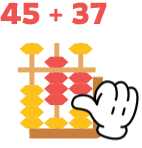
Mental maths example: 125 + 275 = 400

Building the future of mental arithmetic.A new learning system combining the Soroban (Japanese abacus) and learning software.

Young Mathematicians AwardPolymath Brains

Skills for maths and beyond

Practise today. Build skills for tomorrow.

As Seen On

  • Etsy
  • Instagram
  • YouTube
  • TikTok

We believe math geniuses aremade, not born.

Students are learningmathematics.But are they buildingcalculation fluency?

Empowering Pupils to Master Mental Arithmeticthrough Abacus 🧮 Visualization

01Connected physical learning0210-minute daily practice03Teacher-visible progression04Evidence built in school
The learning system

Not another math app.

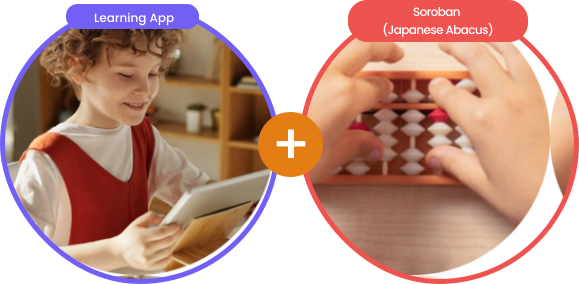
A physical–digital training environment designed to develop numerical fluency, visualisation and mental calculation through a structured progression.

01
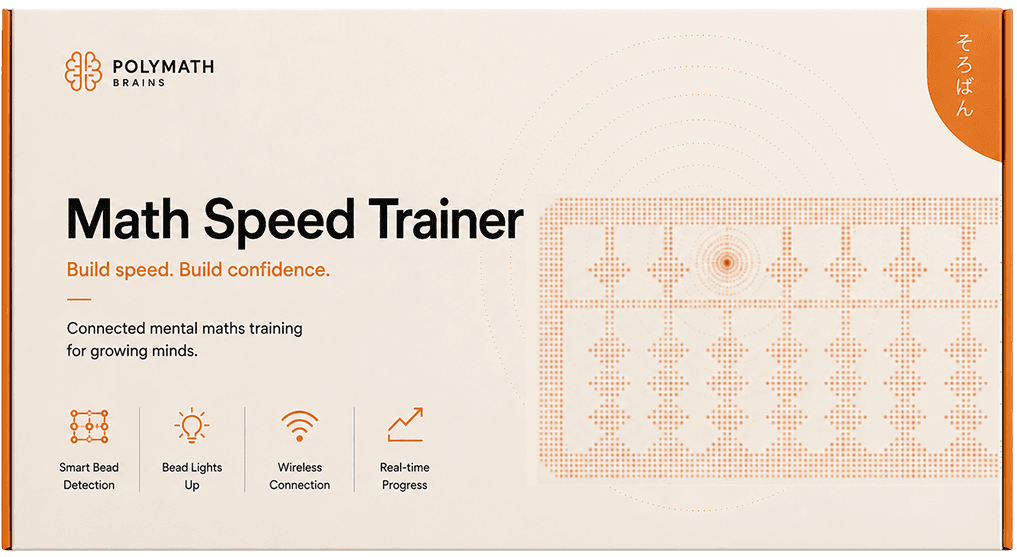
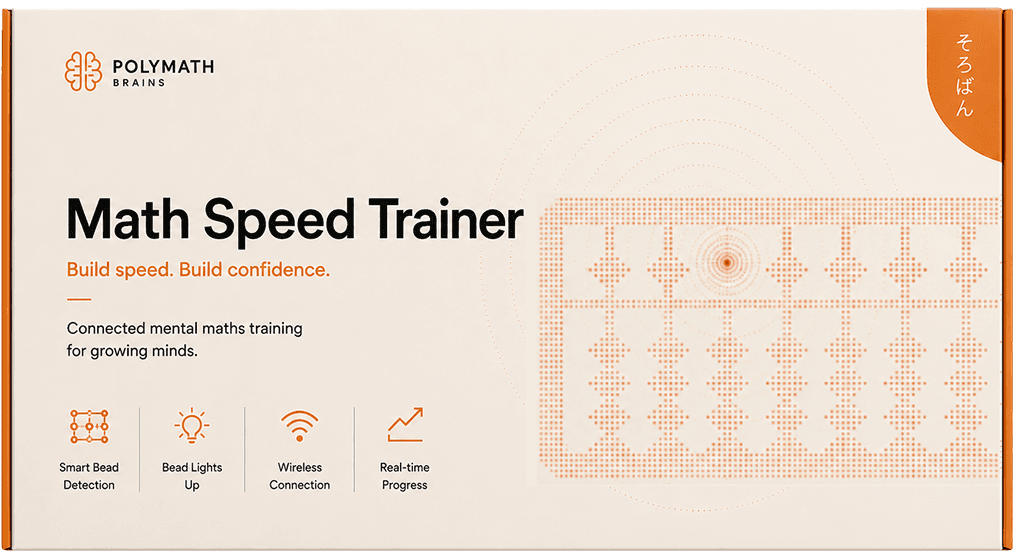
Math Speed Trainer product box

Math Speed Trainer

A connected soroban that makes each movement part of the learning experience.
02
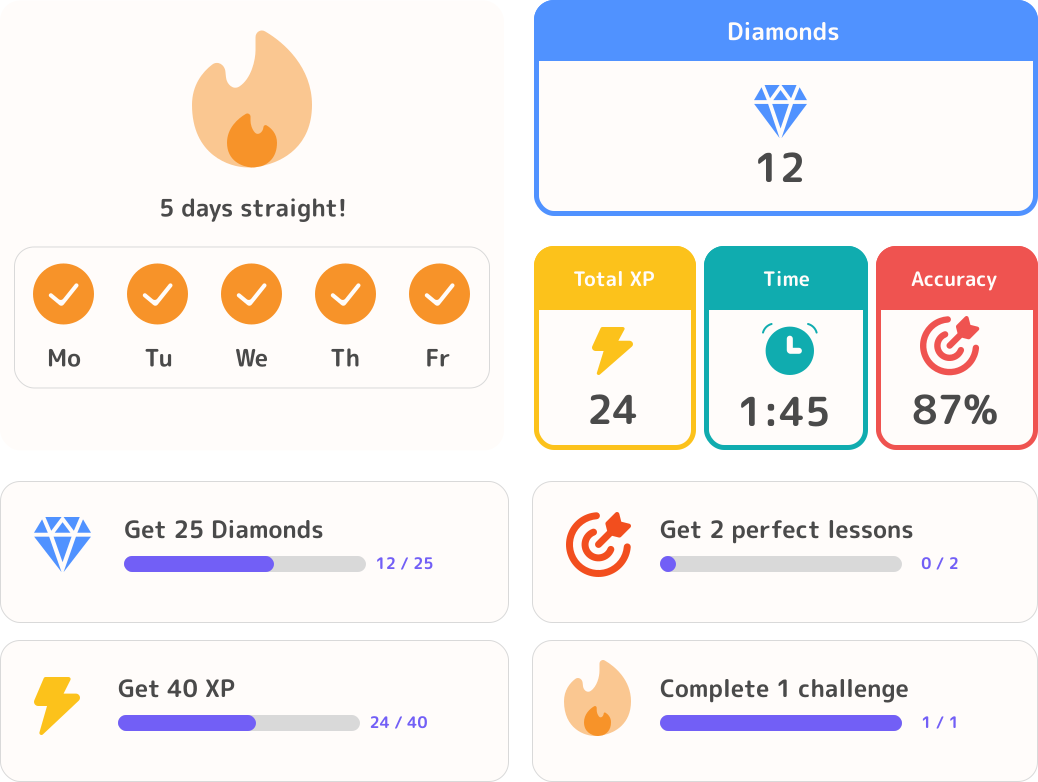
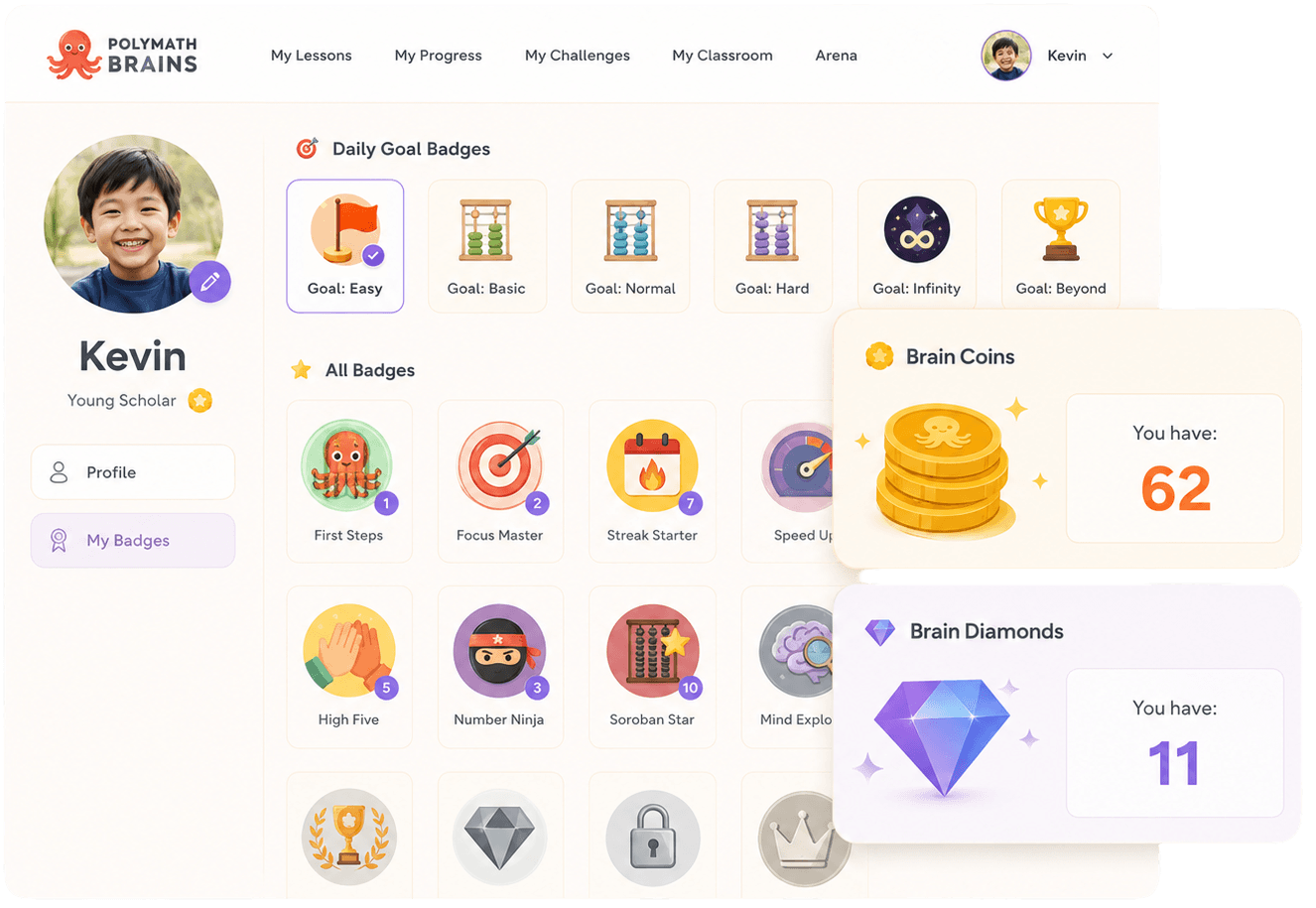
Polymath learning platform progress dashboard

Polymath Platform

Guided exercises, visible progress and challenges connecting practice with insight.
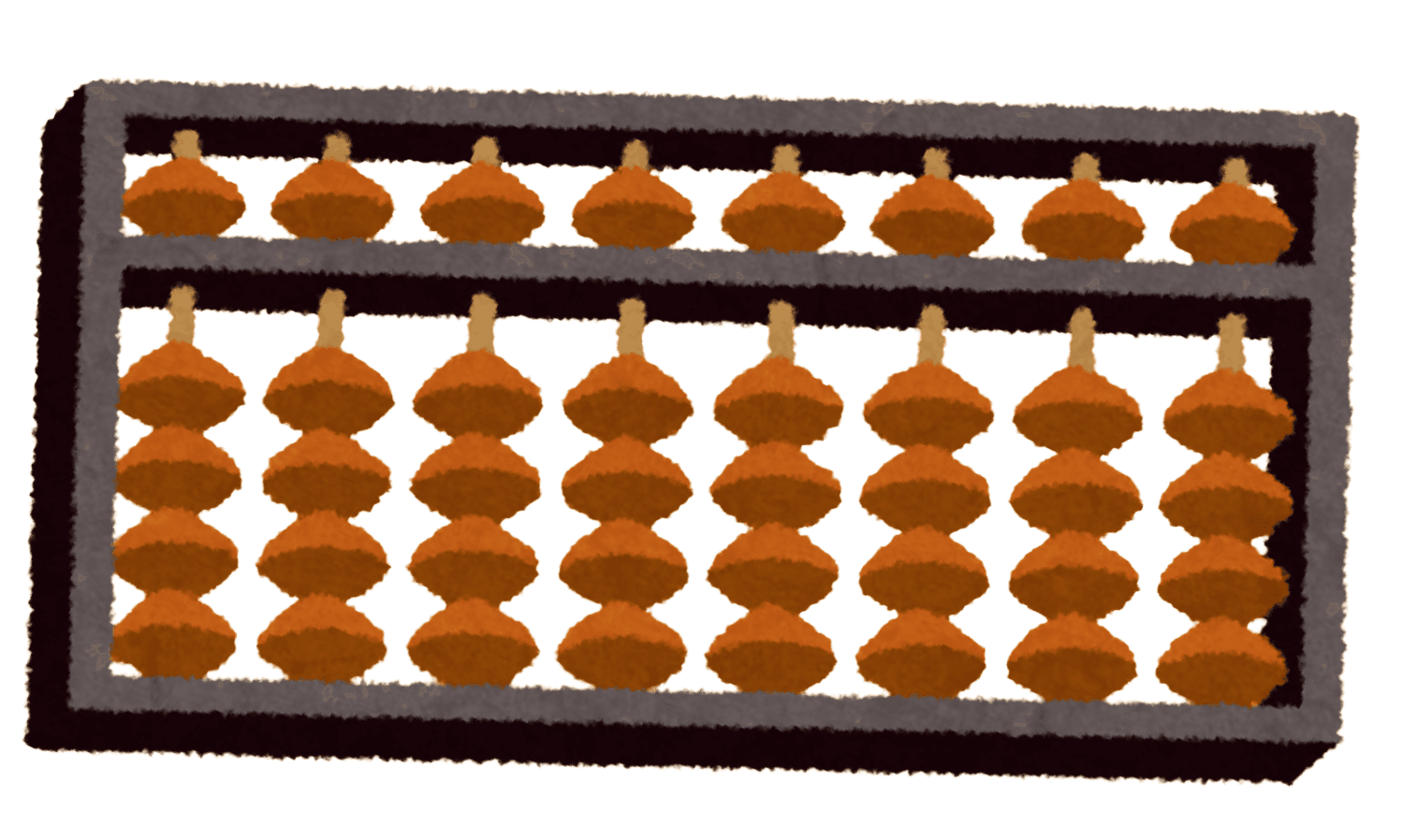
03
Illustration of a Japanese Soroban abacus

Soroban Method

A deliberate pathway from moving physical beads to visualising calculations mentally.
Calculate FasterSolve more in seconds.
Improve FocusTrain attention and discipline.
Training demonstration showing the learning app and Soroban practice
Build ConfidenceSee progress.
Feel proud.
Use Skills EverywhereSchool, exams,
and beyond.

Real examples of what students can master with abacus-based mental math training.

Flash Anzan Challenge

No calculator. Just your mind.

The Exceptional Abilities of Soroban*-trained Kids

Illustration of a Japanese soroban abacus

*Soroban = Japanese Abacus

Demonstration of mental arithmetic skills gained through soroban training

Children performing calculations by picturing an abacus mentally and moving the imaginary beads with their fingers

The Soroban Strategy for Mental Calculation

Learn the basics illustration
1

Start with the Soroban

Students begin by learning calculations on a physical soroban.
Visualise numbers mentally illustration
2

Mental Visualisation

Transition from physical manipulation of the beads to mental visualisation.
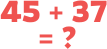
Calculate instantly illustration
3

Calculation Fluency

Achieve rapid and accurate mental arithmetic without the physical abacus.

See the strategy

28 + 7 = ?

Standard method6 steps
28+7351
  1. 1Line up the tens and ones columns
  2. 2Begin with the ones column
  3. 3Calculate 8 + 7 = 15
  4. 4Write 5 in the ones place
  5. 5Carry 1 into the tens column
  6. 6Calculate 2 + 1 = 3
Soroban visualisation2 moves
28Set 28
tens
ones
CountedMovingResting
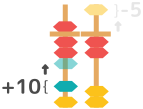
Add 7 as +10 − 3This is called the complement-of-10 rule.
  1. 1Add 10Move one tens bead towards the bar
  2. 2Subtract 3Move three ones beads away from the bar

Same calculation. A more visual mental process.

Beyond the classroom

Where mental maths gives you an edge

Strong number sense supports the speed, accuracy and composure demanded by some of the world's most competitive exams and qualifications.

🇺🇸
U.S. high school students

SAT

Fast, accurate number sense for algebra, problem solving and data analysis.

Try it

A $48 item is discounted by 25%. What is the sale price?
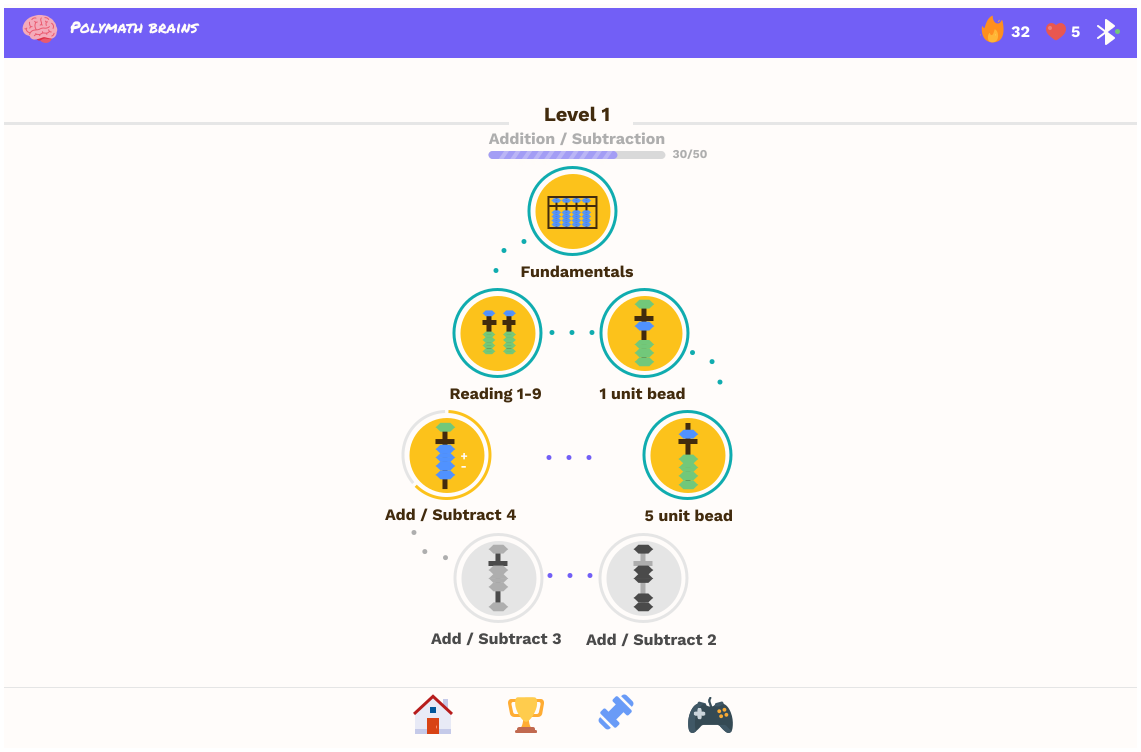
START LEARNING HOW TO READ
NUMBERS ON THE ABACUS

Try Our Game

Comprehensive Learning Pathways

Learning pathways product screenshot
  • TickStep-by-step lessons from beginner to advanced.
  • TickAddition & Subtraction (e.g 2,561 + 5,447)
  • TickMultiplication & Division (e.g 8,944 ÷ 19)
  • TickCalculations with Negative Numbers
  • TickCalculations with Decimal Numbers
  • TickCalculations with Square roots, cube roots, nth roots
  • TickVisual & Auditory Flash Anzan Training

Easy-to-Understand Tutorials

Our Digital App and Electronic Soroban Develops your Mental Math Skills
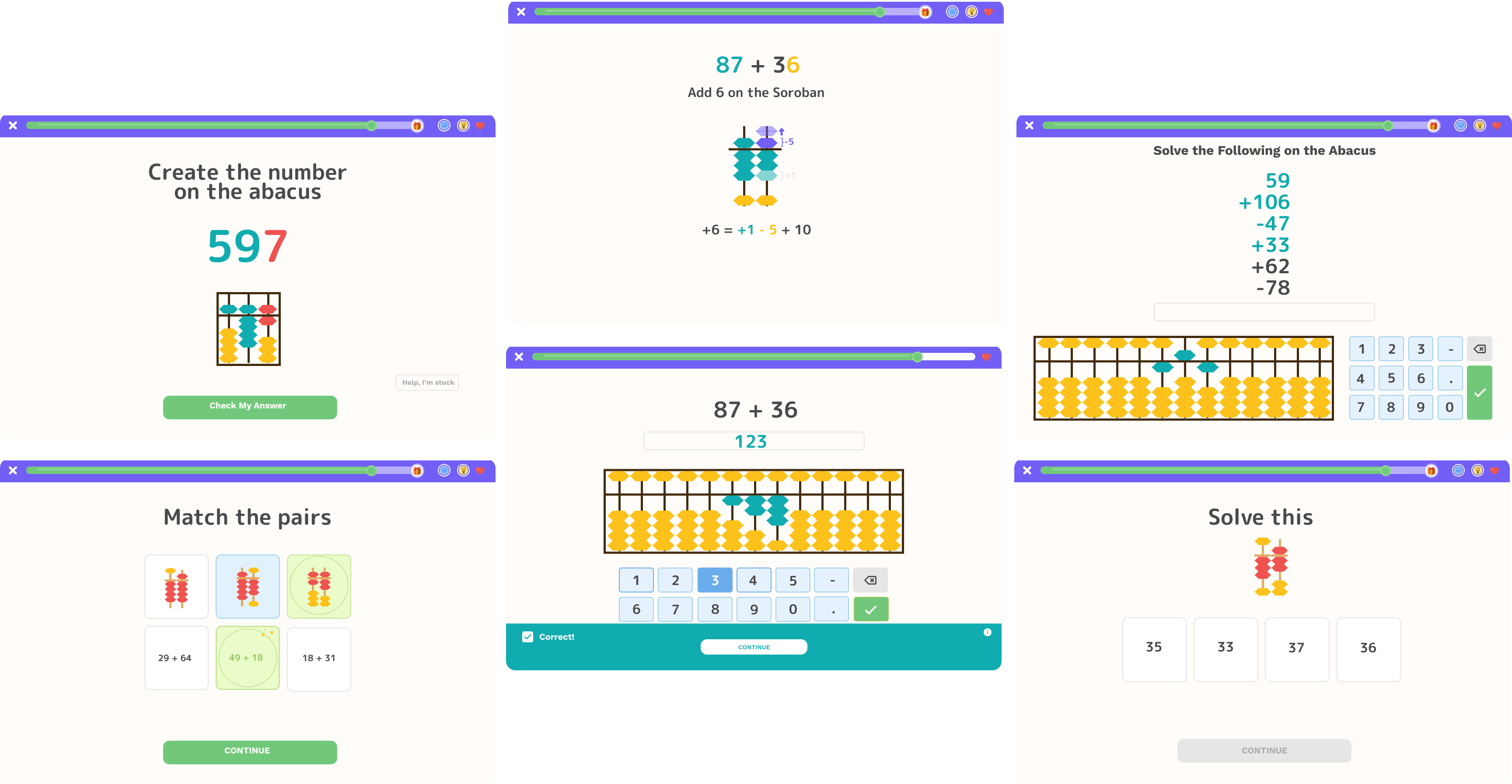
Tutorial product screenshot

Track Your Progress

  • Tailored to turn your weaknesses into strengths using our spaced-repetition algorithm
  • Interactive examples with instant feedback.
  • Get rewarded for your progress
  • Built-in practice goals each week.
  • Stay motivated through gamified learning
  • Compete with others at the same level
Practice screen product screenshot

Everything You Need All in One Device

Polymath Brains Math Speed Trainer electronic device

Portable & lightweight

Easy to carry from home to school and simple to set up anywhere.

Energy-efficient design

Designed for focused practice without demanding lots of power.

Works with iPad & compatible devices

Connect to the learning app for guided lessons and live feedback.

Accurate bead-position detection

Smart sensing recognises each bead movement as your child practises.

Designed for ages 5+

A friendly, tactile learning experience for growing mathematical minds.

Areyoureadytotrainyourbrainlikeamathathlete?

SorobanSprintDay Mental Math ChallengeMinutes a Day
A whole day has 1,440 minutes.
  • SorobanSprint10 minutes · 0.7% of a day
  • School
  • Homework
  • Sports & clubs
  • Meals
  • Play & downtime
  • Family & free time
  • Sleep
Their day keeps moving.
School.Homework.Swimming.Piano.Chess.Dance.Football.Tutoring.Friends.Family time.Dinner.Bedtime.

<1% of their day

10 MIN / DAY100 DAYS16+ HOURS OF TRAINING
Small enough to fit into their day.Consistent enough to build a real skill.

Every session responds to what they mastered, struggled with and are ready to learn next.

Today's training planUpdated from yesterday's performance

Practice

  • Practise +5 Big Friend again
  • More -7 subtraction practice
  • Repeat complements to 10

Ready

  • Ready for 2-digit addition
  • Ready for mixed operations
  • Ready for timed recall

Speed

  • Increase speed to 1.5 sec / number
  • Keep 2 sec / number
  • Slow to 2.5 sec / number

New skill

  • Introduce 5-number Flash Anzan
  • Introduce 2-digit subtraction
  • Add 6-number sequences

Difficulty

  • Accuracy is high — increase difficulty
  • Keep current difficulty
  • Return to guided mode

Personal best

  • New personal best. Move to Level 4
  • Repeat Level 3
  • Aim for 90% accuracy

100-day mental maths challenge

Progress children can feel.

Ten focused minutes each day. Guided practice, progressive challenges and milestones that turn steady effort into confident mental calculation.

  1. Physical soroban

    Understand number through touch and movement.

  2. Fluent calculation

    Build speed, accuracy and confident recall.

  3. Visualisation

    Picture bead movements without the device.

  4. Mental arithmetic

    Calculate through a clear internal model.

  5. Flash Anzan

    Apply mental imagery accurately at pace.

The final destination

Becoming a Flash Anzan master.

See the number. Hold it in your mind. Calculate with confidence.

I'm ready

Here's a little challenge for you

SlowFast
A Flash Anzan number challenge
SorobanSprint©
Limited Spots

100-Day Mental Math Challenge

$699$147 off

One-time payment.

Includes:

  • ✓ Electronic Soroban & Learning Kit
  • ✓ 100 days of guided mental math training
  • ✓ Personalised learning programme
  • ✓ Parent Progress Tracking
  • ✓ Final Challenge + Graduation

Try It Risk-Free

$99refundable deposit

Complete the SprintGraduate🔓

Polymath Brains Membership

$29/month

Available after SorobanSprint.

Continue with advanced training, challenges, leagues and tournaments.

🎓 Graduate? Your first 3 months are included.

Programme guarantee

If your child completes the programme and you don't see meaningful improvement in their confidence with mental calculation, we'll refund your deposit.

Apply for SorobanSprint

No payment required until after acceptance

For Schools

Bringing SorobanSprint to your school?

Tailored school pricing

Bring structured Soroban mental-maths learning to your pupils through a programme designed for the classroom.

Designed for schools that want

  • ✓ Classroom-ready lessons and practice drills
  • ✓ Access for multiple pupils
  • ✓ Progress tracking and achievement milestones
  • ✓ Flexible delivery alongside the school timetable
  • ✓ Support for teachers and programme leaders

Tell us about your school and we'll discuss suitable delivery options, pricing and availability.

Schedule a Call With Us

Tailored to your school's needs

Core Skills Developed Through Soroban Training

Beyond faster calculations, students develop powerful thinking skills that support learning across subjects.


Book illustration
Tick

Problem Solving

  • Pattern Recognition
  • Structured Problem Solving
  • Analytical thinking
Visual abacus illustration
Tick

Spatial reasoning

  • Digit visualization
  • Pattern recall
  • Mental Number Imagery
Rapid multiplication illustration
Tick

Focus

  • Improved concentration
  • Greater calculation accuracy
  • Sustained attention
Calculator illustration
Tick

Mental Arithmetic

  • Faster calculations
  • Improved number fluency
  • Mental calculation speed
Speed practice illustration
Tick

Working memory

  • Remembering multi-step calculations
  • Manipulating numbers mentally
  • Stronger working memory
Mastery path illustration
Tick

Coordination

  • Fine Motor Skills
  • Hand-eye coordination
  • Finger dexterity

and much, much more…

A Method that Gets Results

Mother helping a child learn with a soroban

94%

of parents report an improvement in their child maths skills and understanding

93%

of teachers reported an increased level of interest in maths amongst children with abacus training compared to those who didn't

15-25%

increase in maths attainment scores following 3 months of training for underperforming Year 5 students

Parent FAQ

Everything You Need Before You Apply

Clear answers on age range, time commitment, outcomes, and what happens next.

1. Does my child need to be good at math already?

No. In fact, many children who join the program are not naturally confident in math.

Soroban training focuses on number fluency and visualization, which often helps children who struggle with traditional memorization-based math.

2. What age is this program for?

The Soroban Mental Math Challenge is designed for children roughly ages 6-12.

At this age, children can:

  • understand number structure
  • develop visualization skills
  • build strong mental arithmetic habits

Younger children may still participate if they are comfortable with basic addition and subtraction.

3. What happens after I apply?

The application takes about 1 minute to complete. After you submit your application, we’ll review your child’s details to ensure the program is a good fit.

If accepted, you’ll be invited to reserve your child’s place in the upcoming cohort with a small deposit.

You’ll then receive full details about the program schedule, materials, and how to get started.

There is no obligation to continue if you decide the program isn’t right for your child.

4. What is the soroban (Japanese Abacus)? 🧮

The soroban, is a Japanese abacus and has been taught in schools for over 500 years. It is used for students to learn maths by visualising numbers and over time students can solve problems mentally by visualising the soroban and working out the solution by moving the beads in their mind.

5. How much time does the program require?

The program is designed to fit easily into a child’s routine.

Most students practice about 10 minutes per day.

Short, consistent practice helps develop the mental visualization skills that make Soroban effective.

6. What results can parents expect?

Children who practice consistently often develop:

  • faster mental arithmetic
  • stronger number sense
  • improved concentration
  • greater confidence in math

Many students are able to perform multi-step calculations mentally by visualizing the abacus.

7. What happens after the challenge?

After completing the challenge, students can continue advancing through higher levels of Soroban training.

Many students also choose to participate in mental math competitions and advanced divisions.

8. What if my child doesn’t see improvement?

If your child completes the daily practice during the challenge and you do not see noticeable improvement in their mental math confidence, your deposit will be refunded before the program launch.

9. How is Soroban training different from traditional math tutoring?

Traditional math tutoring often focuses on helping students complete school assignments or memorize procedures for solving problems.

Soroban training focuses on something different: developing deep numerical intuition and mental visualization.

Students first learn to use the physical Japanese abacus. Over time, they begin to visualize the abacus mentally, allowing them to perform calculations in their heads by imagining and moving the beads.

Rather than memorizing steps, children develop strong number fluency, concentration, and mental calculation ability that supports their overall mathematical confidence.

Do I need the hardware?

You can try the taster games now; hardware unlocks the full experience.

How does difficulty work?

We adapt difficulty based on performance so it stays challenging but achievable.

Still have questions?

Apply now and we'll review your child's details to see if this challenge is the right fit.

👉 Apply for the Soroban Mental Math Challenge

Takes about 1 minute

What people are saying

“This should be introduced throughout the world”

“That's amazing!! I wish, I would have learned abacus in school”

“I really struggled with maths at school and I think I would have found this incredibly helpful”

“This is a very good way of learning I love it. The kids are totally engaged”

“I'm looking for something like this for my son”

“I'm really excited for this”